

Biochemistry teams have helped to successfully deliver the Kidney Failure Risk Equation (KFRE), a major digital and clinical innovation designed to support earlier and more appropriate referrals for people with chronic kidney disease.
The achievement follows around a year of collaborative work involving clinical teams, the Hive IT team and the Biochemistry IT team.
The KFRE is a validated risk prediction tool recommended by NICE. It uses a patient’s age, sex, urine albumin:creatinine ratio and estimated glomerular filtration rate (eGFR) to predict the likelihood of needing renal replacement therapy within the next five years. Patients identified as having a risk of 5% or higher can then be considered for referral to secondary care.
Samantha Ekin, Lead Healthcare Scientist in Biochemistry, said: “It was an exceptionally complex piece of work, but one with a very clear purpose: improving care for our patients and communities by supporting more effective and appropriate referrals for people with renal failure into secondary care.
“Projects like this are a powerful reminder of what can be achieved when clinical knowledge, laboratory expertise and digital innovation come together with a shared ambition to make a meaningful difference for patients.
“MFT is the first Trust within Greater Manchester to implement this equation for the benefit of patient care.
“A huge and heartfelt thank you to everyone who contributed, with particular recognition to Jo Adaway, Kath Hayden, Liz Wren, Dr James Tollitt, the Nephrology team at MRI, Adam Tongue, Nick Rolls, Nick Moylan and Dan Morgan.
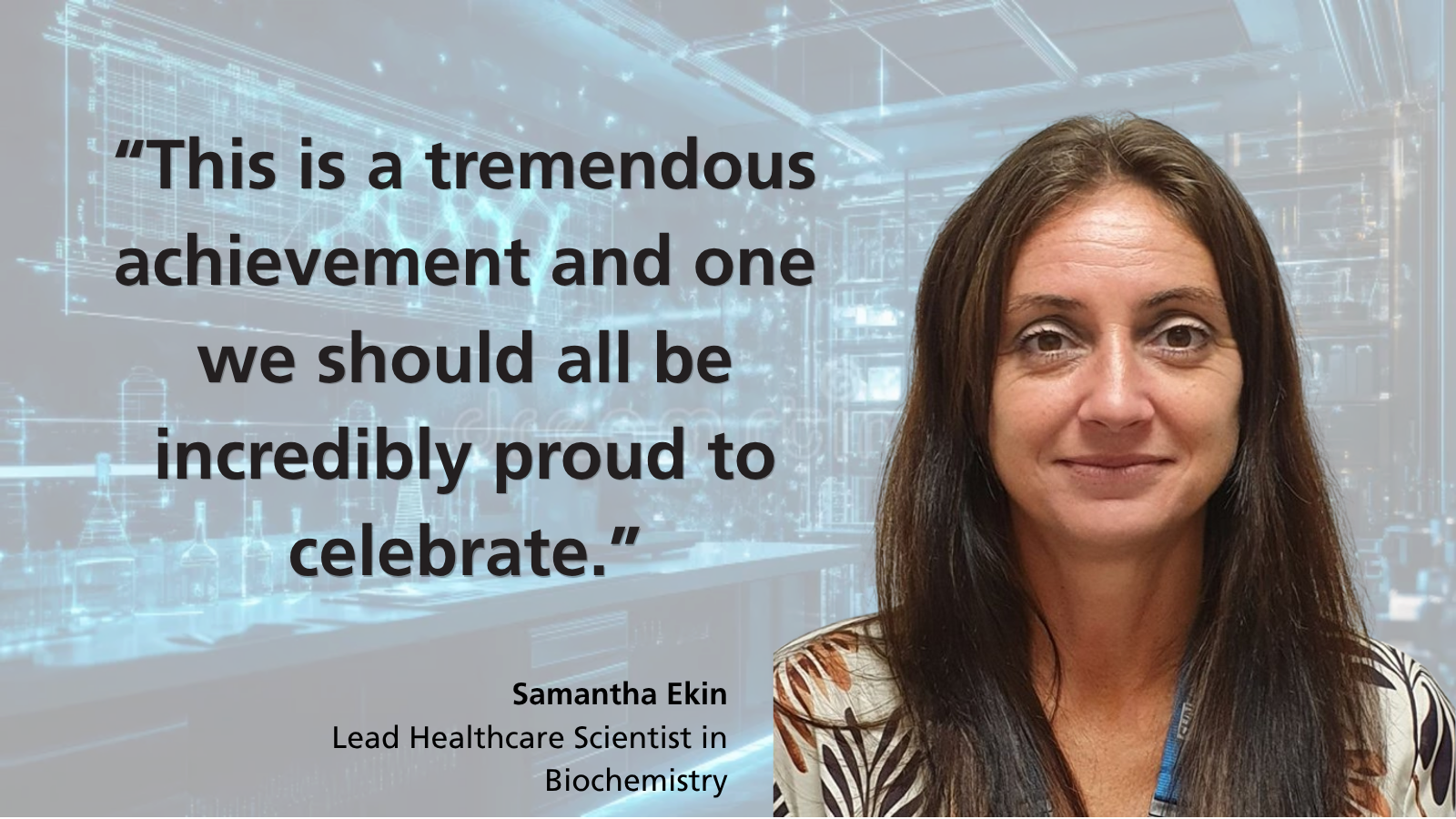
“This is a tremendous achievement and one we should all be incredibly proud to celebrate.”
The KFRE is now automatically added to urine albumin:creatinine ratio requests for adult primary care patients, with results reported into ICE and higher-risk patients flagged for clinical attention.
The introduction of KFRE is expected to improve identification of patients at risk of kidney failure and reduce unnecessary referrals to secondary care.
Leave a Reply