
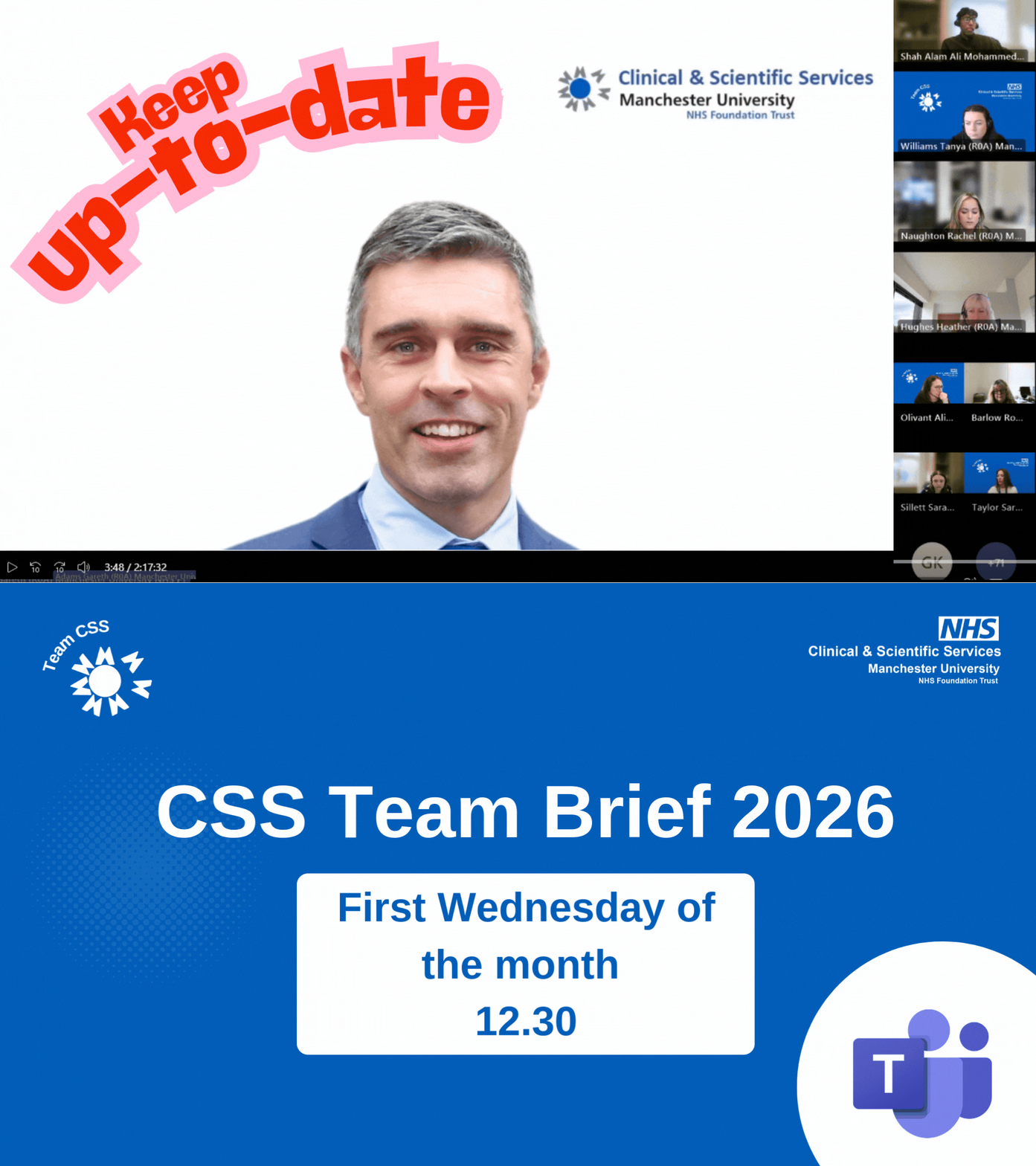
Meeting notes:
- NHS Cancer Plan and Local Initiatives: Gareth provided an overview of the NHS’s 10-year cancer plan, highlighted national ambitions, and recognized the contributions of teams such as histopathology and radiology, with specific examples including CAR T therapy and robotic-guided biopsy technology, involving Chitra, John Hayes, Rishi, Anna Sharma, and their teams.
- National Cancer Plan Overview: Gareth outlined the NHS’s 10-year cancer plan, emphasizing six key themes: improving performance, designing patient-centered treatment pathways, enhancing patient access, fostering research and innovation, addressing cancer in children and young people, and increasing knowledge and treatment for lesser-known cancers. The plan aims for the NHS to be a global leader in cancer care by 2035, with ambitions to consistently meet cancer waiting time standards by 2029 and achieve a 75% survival rate.
- Local Service Contributions: Gareth recognized the significant roles of the histopathology and radiology teams in cancer diagnostics and performance improvement. Chitra, as clinical director, and John Hayes, as operational lead in histopathology, were acknowledged for ongoing improvements, while Rishi and John in radiology were noted for maintaining and enhancing cancer diagnostic performance despite challenges.
- Innovative Cancer Treatments: The meeting highlighted recent local initiatives, including the successful use of CAR T therapy for aggressive blood cancer, with the pharmacy and stem cell teams in laboratory medicine playing central roles. Additionally, Anna Sharma and her team were credited for implementing robotic-guided biopsy technology for lung cancer, supported by artificial intelligence to prioritize high-risk patients for timely intervention.
- Future Priorities and Communication: Gareth emphasized the need to integrate cancer priorities into ongoing and future plans, encouraged sharing of relevant slides and information, and reiterated the importance of recognizing and celebrating the work of all teams involved in cancer care and diagnostics.
- MSK Work Well Project Implementation and Evaluation: Diane presented the MSK Work Well project, detailing its background, collaborative funding with Manchester City Council, delivery model, evaluation outcomes, and future expansion, with support from the MSK team, the Growth Company, and MFT public health consultants.
- Project Background and Rationale: Diane explained that the MSK Work Well project was initiated in response to national drivers to reduce economic inactivity and support people in staying in good work, given that musculoskeletal (MSK) conditions are a leading cause of sickness absence, accounting for 23.4 million lost workdays. The CSS divisional MSK team, seeing over 90,000 patient contacts annually, was identified as an ideal starting point for embedding work coaches and work conversations.
- Collaborative Funding and Partnerships: Manchester City Council provided £438,000 in funding for the Work Well Vanguard, which was used to employ work and health coaches through the Growth Company and to support three AHP MSK staff members. The partnership included the City Council, the Growth Company, MFT MSK teams, local care organizations, and MFT public health consultants, aiming to support 600 participants in developing work or thrive-in-work plans from December to March.
- Delivery Model and Service Implementation: The project began on December 1, 2024, with work and health coaches integrated into rehabilitation classes and waiting areas, and outreach to patients on physiotherapy waiting lists. The service provided 8-12 weeks of low-intensity support, with referrals to the Growth Company for those needing longer-term assistance.
- Evaluation and Outcomes: A mixed-method evaluation was conducted, including patient interviews, staff focus groups, and demographic analysis. Of the MSK team referrals, 32% converted to work plans, with 54% being thrive-in-work plans and 46% return-to-work plans. The project exceeded its initial target with 652 sign-ups by January, four months ahead of schedule, leading to a new target of 810.
- Future Plans and Expansion: The Work Well project has been funded for an additional year until March 2027, with ongoing scoping for future opportunities and a planned celebration event. The initiative is expanding beyond MSK to other areas within MFT, demonstrating its scalability and positive impact on healthcare outcomes and economic activity.
- Recognition, Inclusion, and Wellbeing Initiatives: Alison and Gareth discussed ongoing recognition and inclusion initiatives, including the Human gratitude platform pilot at North Manchester, LGBTQ+ History Month, Race Equality Week, and Time to Talk Day, encouraging staff participation and support.
- Human Gratitude Platform: Alison introduced the Human gratitude platform, piloted at North Manchester, which allows patients, families, and colleagues to send messages of appreciation directly to staff via an app. Gareth noted the pilot’s success and its planned expansion across the organization, encouraging staff to utilize the platform.
- Inclusion and Awareness Campaigns: Alison highlighted LGBTQ+ History Month, focusing on science and innovation, and Race Equality Week, which promotes anti-racist actions and inclusive workplaces. Both campaigns were presented as opportunities for staff to engage in awareness and positive change.
- Mental Health and Time to Talk Day: Time to Talk Day was promoted as a national mental health conversation, with resources from the charity Mind shared to encourage open dialogue and reduce stigma. Gareth reiterated the importance of ongoing support and communication among staff beyond the designated day.
Leave a Reply